Explore a curated stream of blogs, articles, podcasts and insights created by treasury professionals. Our content is designed to inform, challenge, and inspire. Stay up to date, sharpen your perspective and engage with ideas that move treasury forward in a complex financial world.
This article is written by Monkey
Cash flow management is critical for business success. Whether you’re a startup or an established company, implementing effective cash flow strategies can mean the difference between thriving and barely surviving in today’s competitive market.
This guide explores proven techniques to improve cash flow, recognize warning signs of cash problems, and build a stronger financial foundation for sustainable growth.
Cash flow refers to the net amount of cash moving in and out of your business over a specific period. Understanding the difference between positive and negative cash flow is essential:
Positive Cash Flow: More money coming in than going out – your business can cover expenses and invest in growth.
Negative Cash Flow: Outflows exceed inflows – putting your business at risk of financial difficulties.
Important: Cash flow isn’t the same as profit. While profit reflects earnings after expenses, cash flow measures liquidity – how much actual money you have available to operate your business.
Healthy cash flow management allows your business to:
Recognize these red flags before they become critical issues:
If you’re experiencing any of these symptoms, it’s time to implement cash flow improvement strategies immediately.
Faster collections = better cash flow. Optimize your AR with these tactics:
Invoice Immediately: Send invoices the same day you deliver goods or services. Set Clear Payment Terms: Use specific terms like “net-30” or “2/10 net-30”
Offer Early Payment Discounts: 2% discount for payments within 10 days. Implement AR Factoring: Convert receivables to immediate cash (80-95% of invoice value). Automate Follow-ups: Use software to send payment reminders automatically
While collecting payments quickly, extend your own payment deadlines when possible:
Proactive cash flow management requires regular monitoring and forecasting:
Review operating costs and eliminate waste without compromising quality:
Immediate Actions:
Ongoing Reviews:
Excess inventory ties up valuable cash. Implement these inventory optimization strategies: Just-in-Time (JIT) Ordering: Order stock as needed to minimize excess. ABC Analysis: Focus on managing high-value items more closely
Inventory Turnover Tracking: Monitor how quickly inventory sells. Seasonal Adjustments: Reduce slow-moving inventory before peak seasons
If cash flow issues stem from low profit margins, consider strategic price adjustments:
Create a financial safety net for unexpected expenses or opportunities:
Target: 3-6 months of operating expenses in reserve. Strategy: Allocate 5-10% of monthly revenue to cash reserves. Investment: Keep reserves in high-yield savings or money market accounts. Access: Ensure funds are readily available when needed
Partner with financial institutions to offer early payment options to suppliers while maintaining extended payment terms for your business.
Use excess cash strategically by taking supplier discounts when cash flow is strong and skipping them when cash is tight.
Access multiple financing options including factoring, asset-based lending, and invoice financing to optimize cash flow timing.
Track these key metrics to monitor improvement:
Operating Cash Flow Ratio: Operating cash flow ÷ Current liabilities. Cash Flow Coverage Ratio: Operating cash flow ÷ Total debt payments. Free Cash Flow: Operating cash flow – Capital expenditures Days Cash on Hand: Cash and equivalents ÷ Daily operating expenses
Mistake 1: Focusing Only on Profit
Solution: Monitor both profitability and cash flow separately – they’re different metrics
Mistake 2: Inadequate Forecasting
Solution: Create rolling 13-week cash flow forecasts updated weekly
Mistake 3: Poor Customer Credit Policies
Solution: Implement credit checks and clear payment terms from the start
Mistake 4: Seasonal Planning Failures
Solution: Plan for seasonal fluctuations and build cash reserves during peak periods
Effective cash flow management isn’t just about balancing the books – it’s about creating a solid foundation for business growth and sustainability.
Start today by:
Remember: Small improvements in cash flow timing can have dramatic impacts on your business’s financial health and growth potential.
Ready to transform your cash flow management? The combination of strategic processes, technology solutions, and proactive planning will give you the financial control needed to grow your business confidently.
Treasury Mastermind is a community of professionals working in treasury management or those interested in learning more about various topics related to treasury management, including cash management, foreign exchange management, and payments. Click below to register and connect with Treasury professionals worldwide
From Treasury Masterminds
Based on a Treasury Masterminds webinar featuring Bojan BelejkovskI, Board Member at Treasury Masterminds, and Charles Brough, VP Global Head of Account Management at SAP Taulia. Moderated by Patrick Kunz.
Recordings on Spotify and YouTube:
Working capital is one of those topics that every company talks about, but few companies truly own.
It sounds simple enough. Improve receivables. Optimise payables. Reduce trapped cash. Create more visibility. Free up liquidity.
In practice, it is rarely that clean.
Working capital does not sit neatly inside one department. Treasury sees the cash impact, procurement negotiates supplier terms, sales agrees customer terms, finance manages the accounting, operations influences execution. Everyone touches it, yet ownership is often unclear.
That was one of the key themes in our Treasury Masterminds webinar, “Unlocking Liquidity: Flexible Working Capital Strategies”, with Bojan Belejkovski, Treasury Masterminds board member, and Charles Smith from SAP Taulia.
As Patrick said during the session:
“There is no working capital department and there will never be a working capital department. Collaboration is the key.”
That may sound obvious, but it is often exactly where working capital initiatives fail.
Treasury is usually close to the numbers. It sees the cash flow forecast, the bank balances, the liquidity gaps, the funding needs and the impact of payment behaviour.
Bojan described treasury’s role very clearly:
“Treasury owns the measurement and the consequence of working capital, even when it doesn’t own the levers themselves.”
That is the uncomfortable truth.
Treasury can see that DSO is moving in the wrong direction. It can see when supplier terms create liquidity pressure. It can see when cash is trapped in entities or countries. It can also see when the forecast does not match reality.
But treasury does not always control the decisions that create the problem.
Sales may agree to extended payment terms to close a deal. Procurement may negotiate supplier terms without considering the full cash impact. Business units may sit on cash locally. By the time treasury is involved, the decision has often already been made.
Bojan put it even sharper:
“Treasury is often the last function to find out and the first one to be asked to fix something.”
Many treasurers will recognise that sentence immediately.
Visibility Comes First
Before companies can improve working capital, they need to understand where liquidity is stuck.
Charles made that point early in the discussion:
“If you don’t have visibility, you can’t actually take any action, and you can’t improve from where you are today.”
This is where many organisations still struggle.
They may have data in ERP systems, TMS platforms, spreadsheets, bank portals and local reports. The information exists, but it is fragmented. By the time it is collected, cleaned and discussed, the opportunity may already have moved.
That lack of visibility makes it difficult to answer basic questions.
Without answers to those questions, working capital management becomes guesswork. And guesswork is not a strategy, even if someone puts it in PowerPoint.
One of the most interesting parts of the webinar was the discussion about receivables.
When asked where he would focus first, Bojan did not hesitate.
“If I can fix one tomorrow, it’s going to be receivables.”
His reason was simple. Receivables are often under-owned.
Sales is focused on revenue. Credit is focused on risk. Finance is focused on accounting. Treasury is focused on cash. All of them have a role, but that does not automatically create ownership.
Or as Bojan said:
“Everyone touches receivables. No one owns it.”
That is a big issue.
A company can have a strong sales performance and still struggle with cash collection. It can have good revenue growth while liquidity gets stuck in overdue invoices. It can have a strong pipeline, while treasury is forced to deal with the cash gap.
Receivables are also messy. Customer behaviour changes. Billing data is not always clean. Collection processes are not always consistent. Commercial teams do not always want to have uncomfortable conversations with customers.
That is why receivables deserve more attention from treasury.
Not because treasury should suddenly become the collections department, nobody needs that tragedy, but because treasury can help quantify the cash impact, highlight the risk and bring the right teams together.
Supply chain finance was another important topic in the discussion.
It is sometimes presented as a simple liquidity tool. Extend payment terms, offer suppliers early payment, unlock cash. Done.
Reality is more nuanced.
Charles explained it well:
“The primary value of supply chain finance is as a negotiation tool.”
That is an important distinction.
A good supply chain finance programme is not just about creating liquidity for the buyer. It can also support suppliers by giving them access to financing at better rates than they could achieve on their own.
For the buyer, it creates flexibility. For the supplier, it can reduce cash flow pressure. For procurement, it becomes part of the broader supplier relationship.
That also means success depends on adoption.
Charles made another practical point:
“It’s not just about the rate. The supplier experience matters just as much.”
If the programme is difficult to use, suppliers will not adopt it. If procurement is not involved, it will not scale. If treasury builds the programme in isolation, it risks becoming a nice technical solution that nobody actually uses.
Bojan was clear on this as well:
“The programs that scale are the ones where procurement and treasury are genuinely aligned on day one.”
That is probably one of the most practical lessons for any company considering supply chain finance.
Do not start with the technology.
Start with alignment.
Working capital cannot be managed properly if treasury only joins at the end of the process.
Bojan captured this perfectly:
“You can’t drive strategy from the end of the process.”
If customer terms are agreed without treasury input, the cash impact becomes treasury’s problem later. If supplier terms are negotiated without considering liquidity, treasury has to manage the consequences. If local entities hold excess cash without group visibility, treasury has to work around the structure.
The companies that do this better involve treasury earlier.
Bojan explained:
“The companies where treasury drives working capital have given treasury a seat early and with a mandate.”
That mandate matters.
Treasury should not be there just to report the outcome. It should help the business understand the cash effect of decisions before those decisions are made. This does not mean treasury needs to own sales, procurement or operations. It does mean treasury should be part of the conversation when payment terms, financing structures and liquidity trade-offs are discussed.
Naturally, AI came up during the webinar. It always does now. Mention treasury technology in 2026 and AI enters the room like it owns the building.
But the discussion was refreshingly practical.
AI is not the first step.
As Patrick said during the session:
“AI is not step one. It’s often step three or four.”
Before AI can add real value, companies need visibility, automation and clean data. If the underlying data is poor, the output will be poor as well. AI does not magically fix broken processes. It just makes bad data look more confident.
Charles described the role of technology around three themes: visibility, scalability and automation.
Automation removes manual work. It makes receivables finance more scalable. It supports reconciliation. It helps treasury teams manage more with fewer resources.
Only after that foundation is in place does AI become truly useful.
Charles summarised the right mindset clearly:
“People direct. AI executes.”
That is the point.
AI should help treasury professionals gather information faster, analyse patterns and support better decisions. It should not replace judgment.
For small treasury teams, this can be powerful. Less time spent collecting data. More time spent using it.
Towards the end of the webinar, we discussed a more provocative question.
Are working capital programmes real liquidity improvements, or are they sometimes just balance sheet cosmetics?
The honest answer is: both can happen.
Some programmes are used around reporting dates to improve metrics temporarily. That may look good on paper, but it does not necessarily improve the underlying business.
Bojan was clear about that risk:
“Cosmetics are real, but they shouldn’t be the reason why you did the program.”
A well-run working capital programme should create repeatable value. It should improve liquidity, reduce funding pressure, strengthen supplier or customer relationships and give the company more flexibility.
Charles brought the discussion back to one key metric: the internal cost of cash.
If a company understands its true cost of cash, it can make better decisions about early payment discounts, supplier financing, receivables finance and liquidity trade-offs.
That is when working capital moves from cosmetic reporting to real value creation.
Working capital is not just a treasury topic: It is a business topic.
Treasury may see the problem first, but it cannot solve it alone. The real value comes when treasury, procurement, sales, finance and operations work from the same playbook.
That requires visibility.
It requires shared ownership.
It requires technology that supports the process.
And most importantly, it requires treasury to be involved before the problem lands in the cash forecast.
Working capital is often described as hidden liquidity. That is true. But in many companies, the liquidity is not just hidden in receivables, payables or trapped cash.
It is hidden between departments.
Treasury Mastermind is a community of professionals working in treasury management or those interested in learning more about various topics related to treasury management, including cash management, foreign exchange management, and payments. To register and connect with Treasury professionals, click [HERE] or fill out the form below to get more information.
This article is written by TreasuryCube
From back-office function to strategic powerhouse: How modern treasury departments are reshaping corporate finance
Corporate treasury has undergone a remarkable metamorphosis. Once relegated to the shadows of financial management—handling cash, monitoring liquidity, and mitigating basic risks—treasury has emerged as a critical strategic partner driving organizational success. This evolution isn’t merely an upgrade; it’s a complete reimagining of what treasury can and should deliver.
Today’s treasurers sit at the nexus of strategic decision-making, armed with real-time insights, predictive capabilities, and technological prowess that was unimaginable just a decade ago. As CFOs face mounting pressure to deliver value beyond traditional finance functions, treasurers have stepped up to become indispensable strategic advisors.
Organizations hesitating to modernize their treasury functions face existential risks in today’s volatile business landscape:
As one Fortune 500 treasurer recently noted: “Our transformation journey wasn’t optional. It was either evolve or become obsolete.”
The marriage of digital technologies with treasury operations has created unprecedented efficiencies. AI and ML algorithms now predict cash positions with remarkable accuracy, while RPA has eliminated manual processes that once consumed thousands of labor hours annually.
Consider the impact: One global manufacturer reduced payment processing time by 87% through intelligent automation, freeing their treasury team to focus on strategic initiatives that generated over $12M in additional working capital.
Treasury transformation has been significantly advanced by innovative TMS providers like TreasuryCube. As a comprehensive corporate treasury management software, TreasuryCube helps companies manage their cash, liquidity, risk, and investments with exceptional efficiency. Built on the latest .NET framework and utilizing web assembly technology, this SaaS platform offers:
The explosion of financial data has transformed treasurers from backward-looking reporters to forward-thinking strategists. Advanced predictive models now forecast cash positions with precision while identifying anomalies that might signal fraud or operational issues.
Real-time dashboards have replaced monthly reports, enabling treasurers to:
TreasuryCube exemplifies this trend with its comprehensive reporting and analytics capabilities, including customizable dashboards and automated report generation that enable companies to monitor financial performance, identify trends, and make data-driven decisions.
As regulatory frameworks grow increasingly complex—from Basel III to IFRS 9 to expanding ESG mandates—treasurers have evolved sophisticated compliance capabilities. Treasury transformation has enabled organizations to navigate this complexity with remarkable precision.
Modern treasury management systems like TreasuryCube ensure adherence to internal and external regulatory requirements, such as anti-money laundering (AML) and know-your-customer (KYC) guidelines, while incorporating robust security measures to protect sensitive financial data.
ESG considerations have moved from peripheral concerns to central treasury priorities. Forward-thinking treasurers are now:
The migration to cloud-based treasury management systems represents more than a technology shift—it’s a fundamental reimagining of how treasury functions operate. TreasuryCube embodies this evolution as a genuine multi-tenant Software-as-a-Service platform that offers:
As a cloud-native solution, TreasuryCube eliminates the need for extensive implementation timelines with highly configurable workflows and prebuilt master data upload capabilities, reducing consulting and implementation hours significantly.
The API revolution has unleashed unprecedented connectivity between treasury systems, banking partners, and third-party platforms. TreasuryCube leverages this technology with custom connections to both internal and external data sources, ensuring that no matter which solutions or services a company utilizes, their data is always available for visualization, analysis, and reporting.
This connectivity enables:
As treasury operations digitalize, cybersecurity has evolved from IT concern to treasury imperative. Leading treasury management systems like TreasuryCube utilize enterprise-grade security measures, including:
Innovative treasurers have transformed working capital management from a financial necessity to a competitive advantage. TreasuryCube enhances this capability by optimizing receivables, payables, and inventory management through:
The relationship between corporate treasury and FinTech has evolved from competitive to collaborative. TreasuryCube exemplifies this trend by delivering specialized financial software development services that create secure and reliable IT ecosystems for treasury departments.
This approach enables treasurers to:
Perhaps most significantly, the profile of treasury professionals has fundamentally changed. Today’s high-performing treasury teams blend:
TreasuryCube supports this evolution by providing intuitive, user-friendly interfaces that are built on modern technology frameworks, enabling treasury professionals to focus on strategic activities rather than manual processes.
The trajectory is clear: tomorrow’s treasury function will serve as the strategic command center for organizational financial performance. With solutions like TreasuryCube leading the way, we can expect:
As TreasuryCube’s approach demonstrates, this evolution is not just about technological advancement—it’s about empowering financial decisions with real-time insights and seamless automation that drives business value.
Corporate treasury transformation represents more than modernization—it signifies the transcendence of traditional financial boundaries. The treasury function is evolving from a processing center to a value creator, from a risk mitigator to an opportunity enabler, from a cost center to a strategic advantage.
Advanced treasury management systems like TreasuryCube are at the forefront of this evolution, providing the technological foundation that enables treasurers to deliver strategic impact. With features ranging from cash flow positioning and forecasting to intercompany netting and seamless accounting integration, these systems are redefining how treasury departments operate.
Organizations that embrace this transformation journey position themselves not just for financial efficiency but for market leadership. In a business environment characterized by volatility and disruption, a transformed treasury function—supported by innovative technology solutions—becomes the financial north star, guiding the organization through uncertainty with clarity, confidence, and strategic purpose.
The question is no longer whether treasury transformation is necessary, but whether your organization will lead or follow in the race to reimagine what treasury can achieve.
Treasury Masterminds is a community of professionals working in treasury management and those interested in learning more about topics such as cash management, foreign exchange management, and payments. To register and connect with Treasury professionals, click [HERE] or fill out the form below to get more information.
This article is written by our partner, SAP Taulia
At Baker Hughes, supplier diversity is integral to its business strategy. In Australia, diverse suppliers are defined as organizations where at least 51% of ownership, operation, or control rests with a specific underrepresented group, such as those owned by minorities, women, veterans, Indigenous people, LGBTQ+ individuals, or people with disabilities.
We will explore this strategy through valuable insights from three leaders: Anoop Kurup of Baker Hughes, Sharna Collard of Kooya, and SAP Taulia’s Bob Glotfelty.
The purpose of Baker Hughes’ supplier diversity program is to promote inclusion for a fair and meaningful chance for everyone, while also strengthening local economies by fostering job creation in underserved communities. Tapping into a diverse supplier base also drives innovation in procurement practices, as diverse suppliers, according to Anoop, “bring unique ideas, agility, and niche expertise that can lead to better products and services,” contributing to business growth.
The program also reflects Baker Hughes’ corporate responsibility values that are core to its operations. As supplier diversity metrics become a contractual requirement for corporate procurement practices, Anoop states that social responsibility is “no longer a choice or an option,” but a “core expectation from modern consumers and clients.”
For Sharna, CEO of Kooya (a supplier to Baker Hughes), supplier diversity programs have a transformative impact. The program with Baker Hughes has not only opened up opportunities that they may previously not have had access to, but has also “created a platform for us to showcase our quality and innovation that we bring to the table.”
This partnership balances purpose and profit. For Kooya, this means starting with smaller opportunities and showcasing their value, paving the way for them to scale and grow alongside an organization. Sharna notes that genuine partnerships like this have been “the key to Kooya’s success.”
Built on reciprocity, Kooya extends this principle through its non-profit arm, the Bibbulmun Fund. Established in 2014, this community investment initiative fosters leadership and entrepreneurship, aiming to create economic independence for Indigenous communities. By channeling 5% of Kooya’s net profits into the Bibbulmun Fund, supplier diversity partnerships achieve a far-reaching social impact.
Scaling a supplier diversity program for a large organization like Baker Hughes is more complex than it might seem. As Sharna states, it must be “led from the top down” and “needs to be intrinsic within the organization and requires everybody’s buy-in.”
Baker Hughes followed a robust approach. The Reconciliation Action Plan (RAP) in Australia provided a structured framework to take meaningful action on reconciliation with Aboriginal and Torres Strait Islander people. This marked a strategic shift towards inclusive procurement practices that embed social, environmental, and economic value.
Cross-functional communication was also key. Awareness and training sessions were conducted across internal teams to educate stakeholders on the importance of supplier diversity and inclusive procurement.
To ensure the program’s longevity, Baker Hughes collaborated with external organizations to build partnerships with diverse suppliers, such as We Connect International and Supply Nation. As Australia’s supplier diversity leader, Supply Nation links corporates and government businesses with Aboriginal and Torres Strait Islander businesses. This was where Baker Hughes was connected with Kooya.
A key part of Baker Hughes’ strategy is measurement, and clear KPIs were set to track spend with both Tier 1 and Tier 2 diverse suppliers. This commitment is evident in their results: in 2024, Baker Hughes reported approximately $632 million USD spent globally with its diverse and small business suppliers.
Ultimately, it’s this blend of process and genuine commitment that ensures success. Sharna notes that what stands out with Baker Hughes is that “It’s not just this tick and flick. There are real relationships, meaningful outcomes, and most importantly, a fantastic way to build credibility and capability…”
A critical pillar supporting the Baker Hughes program is technology designed to empower suppliers. Baker Hughes has partnered with SAP Taulia to offer early payments to its diverse suppliers, empowering them with faster and reliable access to liquidity, a crucial element for managing working capital and fueling growth. Over the past five years, the early payment program has scaled to support Baker Hughes’ suppliers globally, from APAC, all the way to North America.
As Bob explains, the supplier-centric program is optional and user-friendly. Suppliers receive an invitation and can enroll in just 90 seconds, gaining free access to a portal that provides full visibility into their invoice status.
Once an invoice is approved, suppliers have the option to request early payment at a favorable rate based on Baker Hughes’ strong credit rating, a significant advantage over traditional financing.
SAP Taulia’s flexible program is more than a convenience; it’s a tangible way Baker Hughes invests in the resilience and sustainability of its valued diverse suppliers.
The journey of Baker Hughes and Kooya spotlights a clear blueprint for success. Supplier diversity thrives when it is intrinsic to a company’s operations, supported by robust processes, and enabled by flexible technology like SAP Taulia that strengthens supply chain resilience.
For businesses looking to establish a supplier diversity program, the leaders have provided powerful advice from both sides of the partnership. Sharna encourages Aboriginal and Torres Strait Islander businesses to “know your value and tell your story clearly,” emphasizing that while diversity is a strength, communicating the unique value of one’s products and services is crucial. Noting the importance of building strong partnerships with like-minded businesses, Sharna advises that mutual commitment to a collective goal and objective is key to success.
For corporations, Anoop recommends going beyond one-time purchases by “actively investing in the growth and sustainability of diverse suppliers” through mentorship, training, and flexible access to capital via supplier-friendly technology such as SAP Taulia.
These principles form the cornerstone of an impactful program. By building meaningful and lasting partnerships that fuel mutual growth, companies can create a more equitable business ecosystem for all.
Treasury Mastermind is a community of professionals working in treasury management or those interested in learning more about various topics related to treasury management, including cash management, foreign exchange management, and payments. To register and connect with Treasury professionals, click [HERE] or fill out the form below to get more information.
This is a press release from our partner, ETR Digital
London – June 4th, 2026
ETR Digital and Investec Capital Solutions have completed their first transaction using Working Capital Notes™, releasing earlier liquidity for a UK food supplier importing goods from overseas into the UK grocery market. The transaction marks an early milestone in a partnership the two firms believe points to a faster, simpler and more widely accessible model of working capital finance.
Issued through ETR Digital’s Flownote™ platform, Working Capital Notes™ (WCNs) convert verified trade and logistics data into transferable digital instruments that can be financed once accepted. Rather than relying on rigid, manual processes, the structure draws on real-time trade documentation, so suppliers are paid earlier in the cycle on approved invoices while buyers retain their existing commercial terms. In this transaction, funding was released within minutes of documentation and digital signature, with no major systems integration required.
Crucially, the structure uses verified real-time logistics data – confirming that goods are in transit – as the trigger for earlier payment, rather than relying on manual invoice approval. The approach is particularly suited to sectors such as food and commodities, where long transit times can create significant liquidity gaps. For buyers, supporting faster payment to suppliers helps strengthen supply chain resilience and can support better price execution, while forming part of wider cost and efficiency efforts.
For Investec Capital Solutions, the transaction is an early step in what it sees as a much broader opportunity. Rob Harris, Co-Head, Investec Capital Solutions, commented: “What makes this exciting for us is the versatility. We’ve financed this transaction on the supplier side, but the same structure works just as well for buyers who want to extend payment terms while still ensuring their suppliers are paid promptly. That dual benefit is rare. Over time, we expect to see WCNs used right across supply chains – by suppliers to release cash sooner, and by buyers to manage their own liquidity – with Investec providing the funding that sits behind both.”
He added: “Working capital finance has historically been a fairly blunt instrument. What ETR Digital’s technology gives us is precision – funding that responds to verified trade activity, deploys quickly, and is backed by enforceable digital assets. From a financier’s perspective, that combination of speed, security and auditability is genuinely valuable. It allows us to support a wider range of businesses, with greater confidence, and to build long-term funding relationships rather than one-off facilities. We see significant room to grow this with ETR Digital, and we’re committed to doing exactly that.”
TETA played a central role in this inaugural transaction for the UK food supplier, providing visibility across the supply chain through its Signal platform, including the transportation data used to support earlier payment.
John Buxton, Chair, TETA, said: “Access to real-time transportation data is a critical step in helping businesses move goods across long distances while improving cash flow. By enabling earlier payment through WCNs, suppliers can access liquidity sooner, creating a more efficient outcome across the whole supply chain.”
The transaction draws on verified trade and logistics documentation – including bills of lading, commercial invoices and transport certification – to create a transferable instrument that can be financed as soon as it is accepted by the buyer. Trade documents are managed through TETA’s Signal platform, and once approved, the WCN is digitally created and signed, then funded by Investec Capital Solutions. At maturity, the buyer settles with Investec under agreed commercial terms – a structure that is simple to operate and sits alongside businesses’ existing workflows.
Dominic Broom, CEO, ETR Digital, said: “Working with a funding partner like Investec Capital Solutions, and a supply chain platform like TETA, is central to making this model work in practice. Our technology creates the instrument, TETA provides the trade documentation layer, and Investec brings the capital and the commercial relationships. Together, we are giving businesses on both sides of a transaction a genuinely new way to improve liquidity – one built around the way trade actually flows. This first transaction is a great milestone, but we predict many more to come.”
The collaboration forms part of a broader programme, with further transactions anticipated as adoption of Working Capital Notes™ grows across UK and international supply chains.
To explore how WCNs could improve your working capital metrics, start with ETR Digital’s free Cash Conversion Cycle Calculator – see in 60 seconds how much cash is currently trapped, and how easily it can be freed up:
Investec Capital Solutions provides working capital financing to UK businesses, combining specialist expertise with flexible funding structures designed around real commercial needs. By partnering with technology providers such as ETR Digital, Investec Capital Solutions is expanding the ways it can support liquidity across supply chains – for suppliers and buyers alike.
ETR Digital is a UK-based fintech specialising in digital working capital finance. Its Working Capital Note™ solution enables companies to enhance liquidity, reduce operating costs, and improve EBITDA by optimising working capital.
TETA is a supply chain platform designed to improve visibility, efficiency and compliance across trade flows. Through Signal, businesses can manage trade documentation, shipment visibility and financing workflows, helping suppliers, buyers and financial institutions work together more effectively.
Media contacts:
Treasury Masterminds is a community of professionals working in treasury management or those interested in learning more about various topics related to treasury management, including cash management, foreign exchange management, and payments. To register and connect with Treasury professionals, click [HERE] or fill out the form below.
Written by Renea Mahadeo, Treasury Masterminds Board Member
If you are planning a TMS implementation, your ERP is not just a data source. It is the foundation the integration will be built on. The cleaner and clearer that foundation is before day one, the faster and smoother the build goes. This article walks through five areas worth getting right before the project formally begins.
Before any preparation can happen, it helps to be clear on what the integration carries. Data moves in both directions. From your ERP to the TMS: bank account master data, company codes, chart of accounts, counterparty records, and FX rates. From the TMS back to the ERP: bank statements, cash positions, payment instructions, GL postings, and hedge accounting entries.
Each of these flows has three things that need to be defined before the build starts: the frequency (real-time, intraday, or end-of-day), the format, and the owner. Getting alignment on these early shapes every design decision that follows.
ERP systems accumulate years of data. Company codes that were added and never decommissioned. Bank accounts that were closed but never removed from the system. Cost centres that no longer reflect the current organisational structure. None of this is unusual, and none of it is a problem. The challenge arrives when the integration requires two systems to agree on the same data for the first time.
The most valuable thing you can do before your implementation begins is to pull your bank account master data, review your company code structure, and identify anything that does not reflect current operations. A data cleanse workstream running alongside integration design is far less disruptive than one running during UAT.
GL posting requirements are easy to defer. They feel like a finance detail rather than a treasury detail, and there is usually enough to discuss in the early design sessions without them. The challenge is that the answers require alignment between treasury, finance, and sometimes tax. That alignment takes time.
Questions like: how should bank charges post, what is the accounting treatment for short-term investments, and how does FX revaluation flow through the ERP are not quick to resolve. Getting your financial controller into the conversation in the first month means these decisions are made as part of the design, not as a blocker to go-live.
Your ERP runs batch processes at fixed intervals. Your TMS will show cash positions in near real-time. At any given point in the day, the two systems will show different numbers. Both will be technically correct, based on different data cut-off points.
Before the integration goes live, treasury and finance need to agree on a documented answer to two questions: which system is the source of truth for cash positioning, and at what point in the day does that apply. This is a design decision, not an operational one. Making it before go-live, with formal sign-off, removes a significant source of confusion for the operations team once the system is live.
Reconciliation is the operational heartbeat of a TMS-ERP integration. Every payment that leaves the TMS, posts in the ERP, clears at the bank, and returns on a bank statement needs to match at every step. The reconciliation design determines how exceptions are handled, how month-end closes, and how the treasury operations team works day to day.
Treating reconciliation as a formal design deliverable, with the same level of documentation and sign-off as any other design document, means the operations team goes live with a clear process rather than building one under pressure. It is one of the highest-value investments in the preparation phase.
Integration testing between the TMS and ERP consistently surfaces things that unit testing and transaction flow testing do not. Timing mismatches, data format differences, and edge cases in GL posting logic all appear when the two systems are running together, not before.
Building your project timeline from the go-live date backwards, with integration testing as a fixed and protected window, gives the team enough time to resolve what surfaces properly. The preparation work in the areas above directly reduces what surfaces during testing. Investing time before the build starts pays back in the testing phase.
None of these preparation steps require significant budget or external resource. They require the right internal conversations to happen before the implementation begins rather than during it. Treasury, finance, and operations all have a stake in how the integration is designed. Getting them aligned early is the most practical thing a treasury team can do to set the project up for success.
Join Treasury Masterminds and Trustpair for a masterclass on the practical implementation of VoP, including its limitations—such as geographical restrictions, limited checks, and its late position in the payment chain. Discover why comprehensive fraud prevention solutions like Trustpair go beyond VoP and are essential for safeguarding your organization throughout the entire payment process.
We hosted the one and only Summa Simmons, also known as the “Cash Queen,” Associate VP of Global Treasury at Victoria’s Secret & Co., seasoned finance strategist, and champion for diversity and inclusion. In this episode, we’ll dive deep into treasury innovation, leadership lessons from retail treasury, and why inclusion truly matters for building high-performing teams. But it wasn’t all serious—we also explored some treasury “Netflix plots” and found out exactly why Summa earned her title as the “Cash Queen.”
Join Treasury Masterminds and Kyriba for a webinar exploring the most impactful trends shaping treasury and financial management today. Our expert panel will share insights to help finance leaders prepare for what’s next—and seize new opportunities.
Join Treasury Masterminds and Embat in this insightful webinar, where our expert panel explores practical, real-world applications of AI. We will cut through the buzz to reveal how AI effectively addresses daily operational pain points, empowering finance teams like never before.
“Behind the Mic with Eleanor Hill—The Voice of Treasury Stories” What happens when two treasury podcasters sit down for a live, unscripted conversation? Join us as I speak with Eleanor Hill, founder of TreasuryStoryteller.com, for a special debut episode of TreasuryMasterminds: Mastering Treasury Together Podcast.
Our experts will delve into insights from Trustpair’s UK Fraud Study, highlighting why organizations are struggling to detect and prevent fraudulent activities effectively. Discover how emerging AI-driven threats and evolving cyber fraud tactics are leaving even the most diligent teams vulnerable, and learn the steps you can take to safeguard your organization.
Choosing the right Treasury Management System (TMS) is one of the most impactful decisions a treasury team can make. With countless options on the market and rapidly evolving technology, how do you identify the solution that truly meets your organization’s needs? Join us for an engaging discussion featuring industry experts who will share actionable insights and real-world experiences to help you navigate the TMS selection process.
We conducted a comprehensive survey, engaging treasury professionals from various sectors to explore how AI is currently being utilized, the key opportunities and threats it presents, and where participants believe the future of AI in treasury is heading. The insights we’ve gathered are not just fascinating—they’re a window into how technology is reshaping the way treasury functions at both strategic and operational levels.
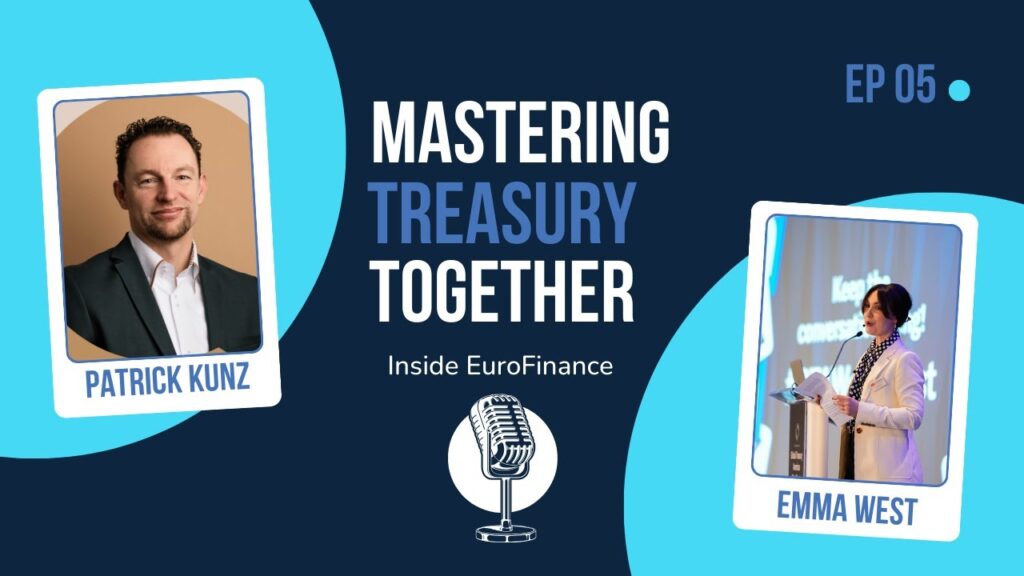
We are excited to sit down with Emma West, the driving force behind one of the world’s most influential finance events—EuroFinance.
Emma’s career spans prestigious names like the Financial Times and The The Economist Group, but her path to becoming a leader in the treasury and payments space is as fascinating as the events she curates.
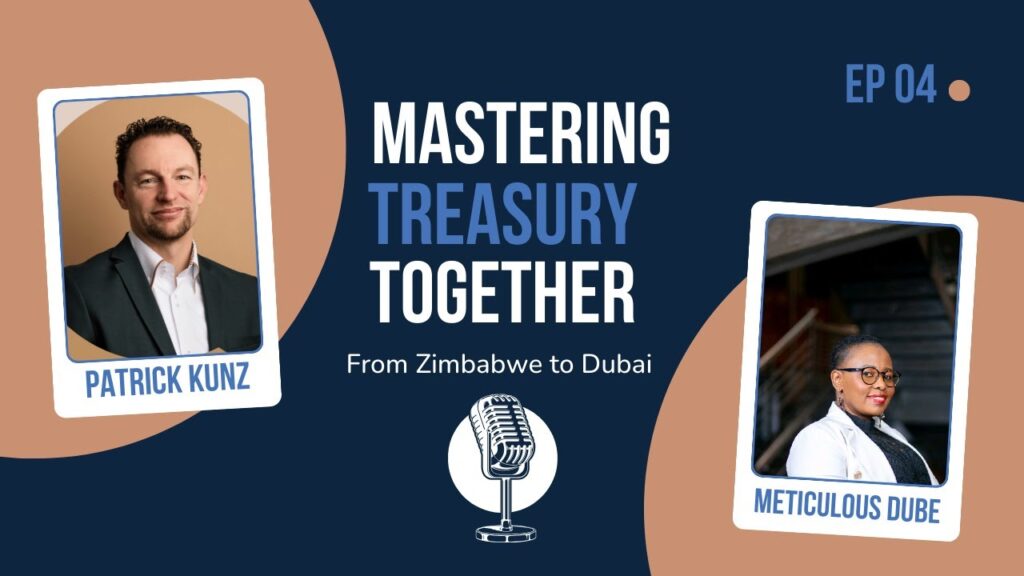
Join us for a special episode of the Treasury Masterminds podcast featuring Meticulous Tendai Dube, a seasoned treasury professional who has led teams across Africa and the Middle East.
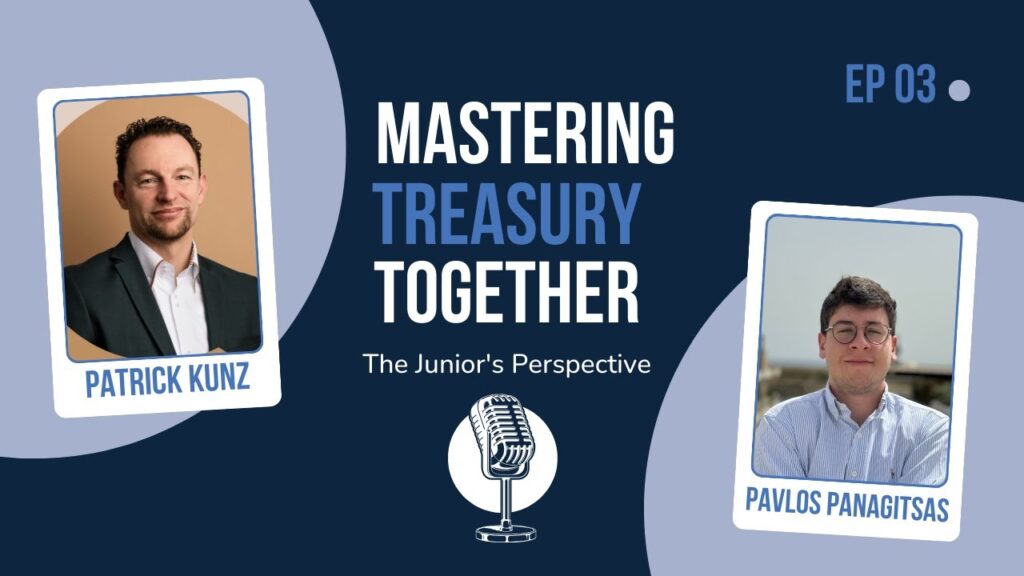
Join us for a fresh take on treasury with Pavlos Panagitsas, Junior Treasury Analyst at Avramar, ESG enthusiast, and founder of ESG news platform ESGenre.
We hosted the one and only Summa Simmons, also known as the “Cash Queen,” Associate VP of Global Treasury at Victoria’s Secret & Co., seasoned finance strategist, and champion for diversity and inclusion. In this episode, we’ll dive deep into treasury innovation, leadership lessons from retail treasury, and why inclusion truly matters for building high-performing teams.
“Behind the Mic with Eleanor Hill—The Voice of Treasury Stories” What happens when two treasury podcasters sit down for a live, unscripted conversation? Join us as I speak with Eleanor Hill, founder of TreasuryStoryteller.com, for a special debut episode of TreasuryMasterminds: Mastering Treasury Together Podcast.