The Modern Treasurer: A Strategically Skilled Financial Leader
Treasury professionals must possess a diverse set of competencies. Treasury Masterminds recently conducted a poll among nearly 100 treasury professionals, exploring the question: “What do you think is the most important skill for a treasurer to have?” The findings offer valuable insights into the treasury function’s evolving demands and highlight the multifaceted nature of the […]
The U.S. Finally Catches Up to the Rest of the World on Payments
In a move that’s been a long time coming, the United States Treasury is finally getting rid of paper checks. On March 25, 2025, President Trump signed an executive order mandating that all federal payments and collections go digital by the end of September. While the rest of the world has been making payments electronically […]
When Treasury Chooses You: Insights from a Recent LinkedIn Poll
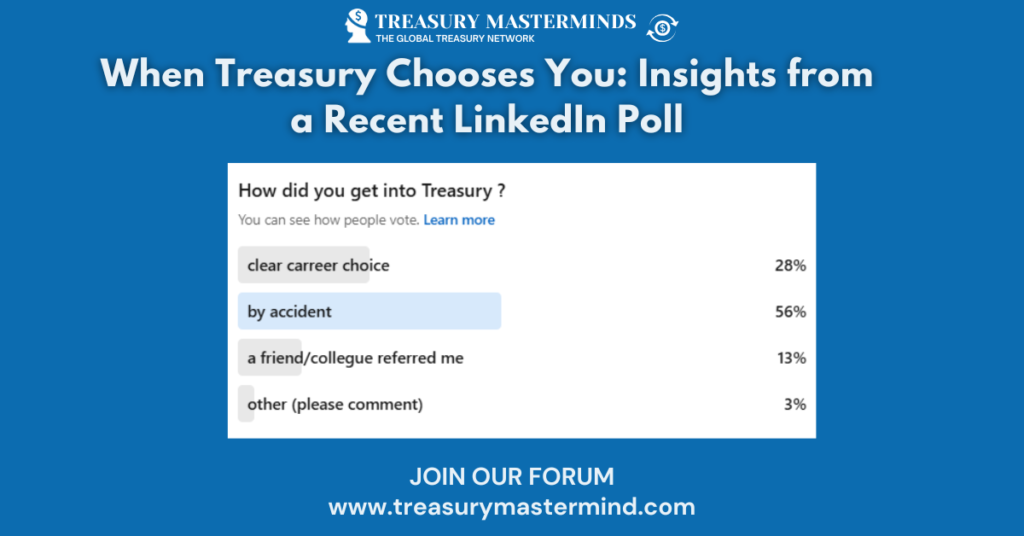
Careers can take unexpected turns, and for many Treasury professionals, the path into their field seems to have been anything but straightforward. A recent LinkedIn poll posed the question, “How did you get into Treasury?” and the results offer a glimpse into the varied ways professionals land in this critical area of corporate finance. Here’s […]
Treasury Contrarian View: Treasury Dashboards — Are We Tracking the Wrong Metrics?
Dashboards have become a staple in corporate treasury—colorful visuals, real-time updates, and dozens of KPIs all packed into a single screen. But here’s the question: Are treasury dashboards helping us make better decisions, or are they just digital wallpaper? Are we tracking the right things, or are we so focused on reporting that we’re missing […]
CBDC vs Stable Coin for Treasurers
The rise of Central Bank Digital Currencies (CBDCs) and stablecoins is a hot topic in the world of treasury and payments, particularly with the push toward faster, more efficient international transactions. Here’s a comparison of CBDCs and stablecoins, focusing on control and their potential usefulness for corporate treasurers: 1. CBDCs (Central Bank Digital Currencies) CBDCs […]
Treasury Contrarian View: Will AI Replace Treasury Analysts?
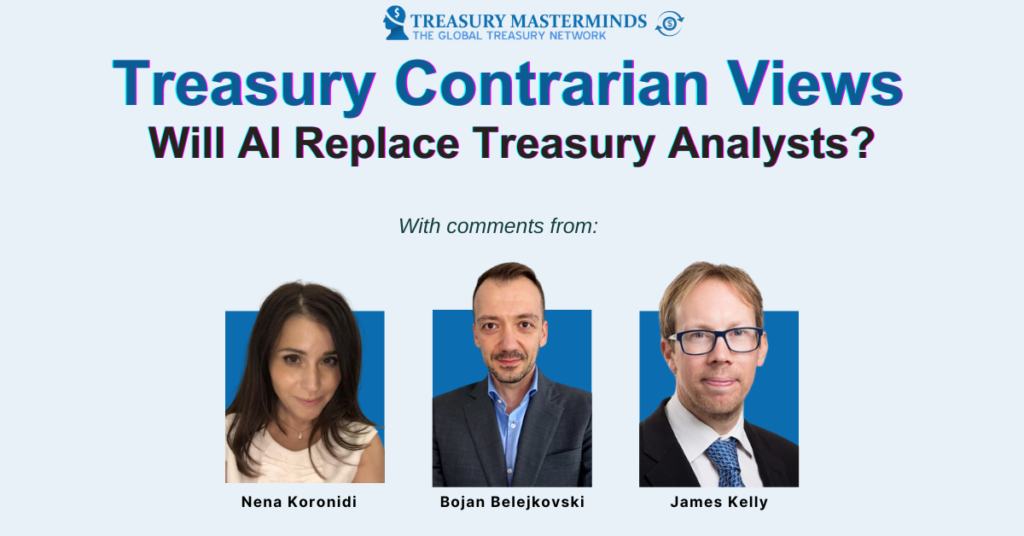
With the rise of artificial intelligence (AI) and automation, corporate treasury is experiencing a technological transformation. AI-driven forecasting, reconciliations, and fraud detection are becoming more advanced. But does this mean that the role of treasury analysts will soon be obsolete? Or is AI simply another tool to enhance efficiency rather than replace human expertise? The […]
Treasury needs to be it’s own DOGE

Written by Patrick Kunz 1. Treasury as the “DOGE” of the Organization Just like the Department of Governmental Efficiency (DOGE) would aim to streamline spending, eliminate waste, and optimize financial processes in government, corporate treasurers play the same role within a company: Corporate treasurers are, in a sense, the “DOGE” of the company—watchdogs of financial […]
Treasury Contrarian View: Payments in Crypto—A Treasury Reality or Just Noise?
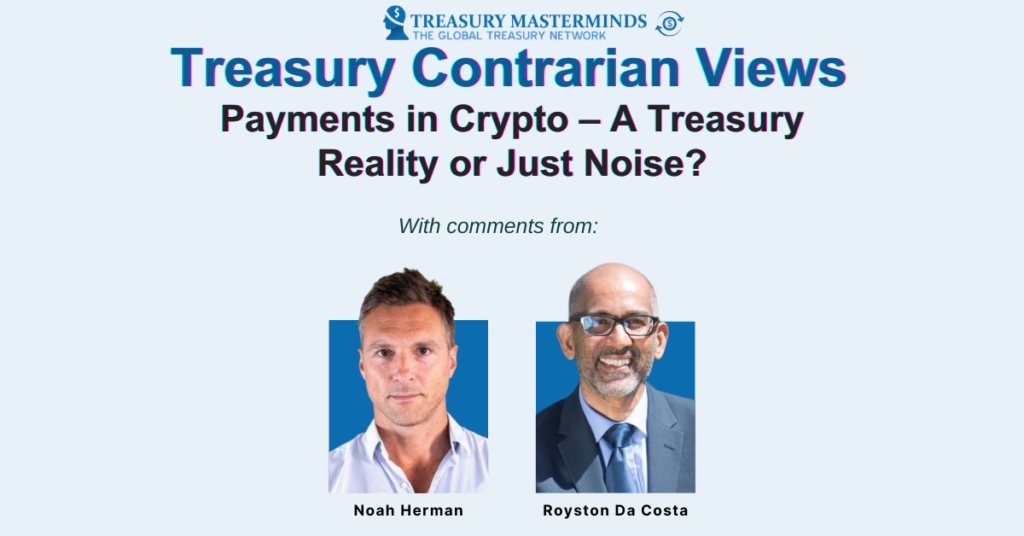
Cryptocurrency has been a hot topic in financial markets for years, but is it truly a viable payment method for corporate treasury, or is it just hype? While some companies have begun accepting and using crypto for payments, others remain skeptical about its practicality, volatility, and regulatory implications. So, should treasurers take crypto payments seriously, […]
Applying Hedge Accounting for Your FX Hedging: A Checklist, Tips, and Tricks

Written by Craig Haymaker Hedge accounting is powerful. It allows corporate treasurers to manage the risk inherent in foreign exchange (FX) exposures while reducing earnings volatility. By aligning the accounting for hedging instruments with the underlying risk exposure, hedge accounting provides a more accurate reflection of economic reality. However, hedge accounting can be complex and […]
Treasury Contrarian View: Should Treasury Be a Profit Center?

Traditionally, treasury has been seen as a cost center—a function focused on managing liquidity, risk, and financial operations rather than generating revenue. But as treasury teams gain access to more sophisticated tools, data, and financial instruments, a provocative question arises: Should treasury operate like a profit center rather than a cost center? The Case for […]